What should a site survey establish?
Ask the assessment team to review the site location, available space, existing plumbing and sewer connections, available drawings, access for servicing and intended discharge or reuse. The survey should inform the complete plant layout, not simply identify a position for the separator. For an assessment enquiry, provide these details and a contact name and phone number to India Water Systems.
How should we confirm capacity and wastewater suitability?
Provide expected daily sewage flow, occupancy, use patterns, peak variation and future demand. Ask the designer to record the sizing basis and incoming wastewater characteristics. Aquatron's described process handles toilet solids and liquids, with separated liquids joining grey water for further treatment. Domestic sewage at an industrial site is not the same as industrial process effluent; the latter needs a separate assessment.
What should the complete installation layout include?
Request a layout covering the separator, bio-chamber, liquid-treatment stages, filtration, UV disinfection, connecting plumbing and service access. The published process includes aeration and ozonation followed by sand and carbon filtration and UV. Separator dimensions or published space-saving comparisons do not establish the footprint of your complete STP. Have the designer confirm the equipment arrangement against your flow and treatment targets.
What plumbing details need confirmation before installation?
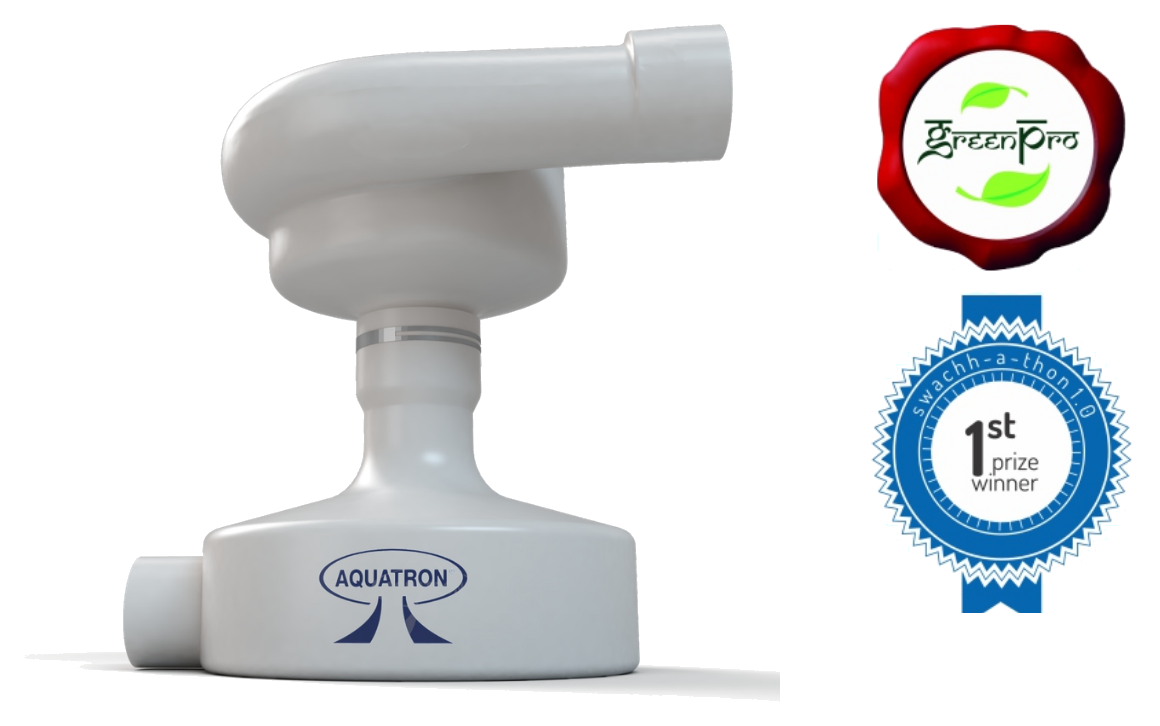
The separator uses flush momentum, centrifugal force and gravity, so its connection to the building's plumbing needs site-specific review. Ask for drawings confirming pipe routing, slopes, bends and connections to the separator, bio-chamber and downstream treatment. Have the designer check existing plumbing rather than assuming it is suitable unchanged. Treat published product specifications as design inputs requiring confirmation, not a substitute for installation drawings.
Who should handle civil works and electrical integration?
India Water Systems describes services covering tank construction or fabrication, equipment supply, plumbing and electrical integration, installation and commissioning. Ask the proposal to identify who is responsible for each part and what is excluded. The separator's electricity-free operation does not mean the whole treatment plant needs no electrical integration. Confirm the requirements of the selected downstream equipment as part of the complete design.
Can Aquatron® be installed in an existing building or retrofitted to an STP?
India Water Systems offers retrofit assessments, and the site describes the 50 KLD WeWork BlueOne Square project in Gurgaon as a retrofit around live plumbing. That is a project example, not proof that every building can use the same arrangement. Suitability depends on existing layout, plumbing, sewage flow and treatment requirements. Share current capacity, drawings, maintenance history and water-quality reports, together with your phone number, for an assessment.
What should we request at commissioning and handover?
Agree in writing how the installed system will be checked against its design basis and treatment targets. Request the final plant layout, equipment-specific operating instructions, commissioning and water-quality records, and a maintenance plan covering the bio-chamber, downstream treatment, filters and UV. Name the person responsible for routine checks and agree the service scope and support contact. Low maintenance does not mean no maintenance or no responsibility for performance.